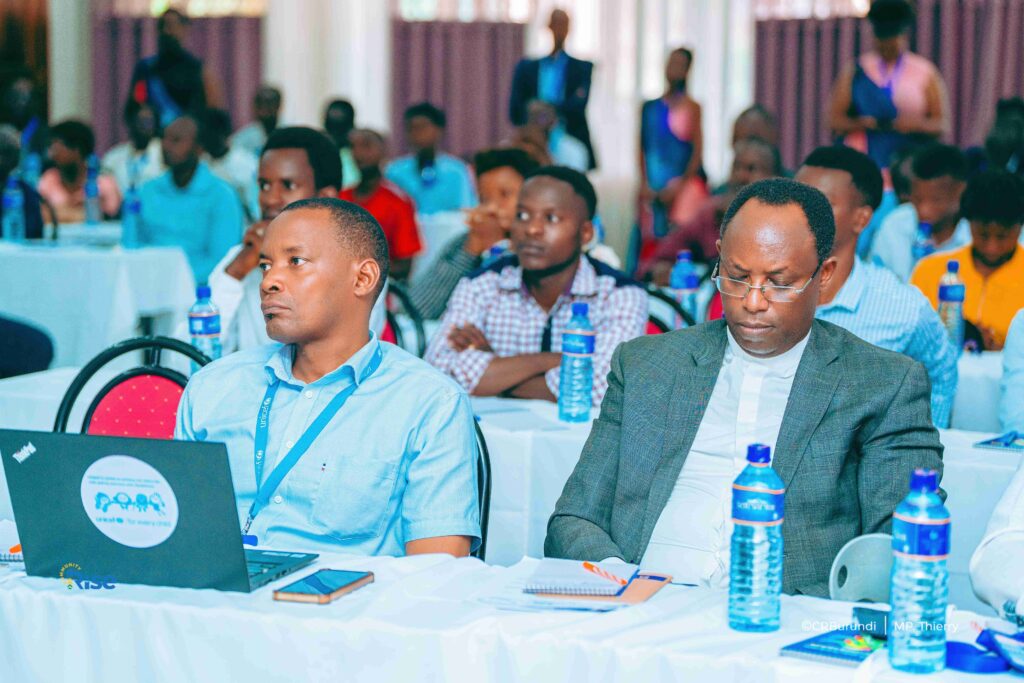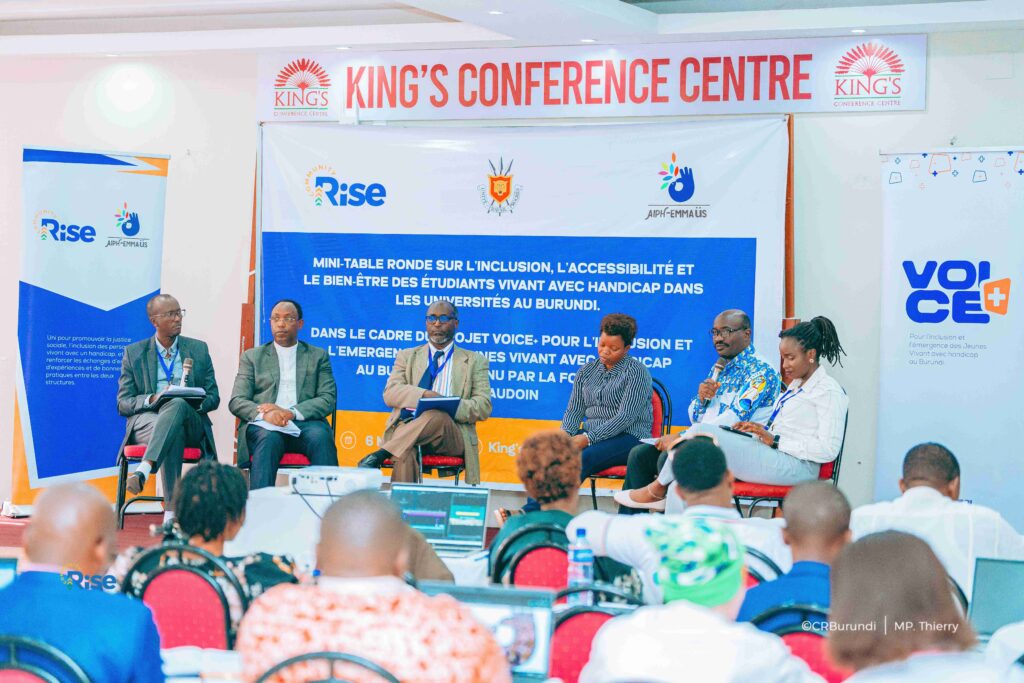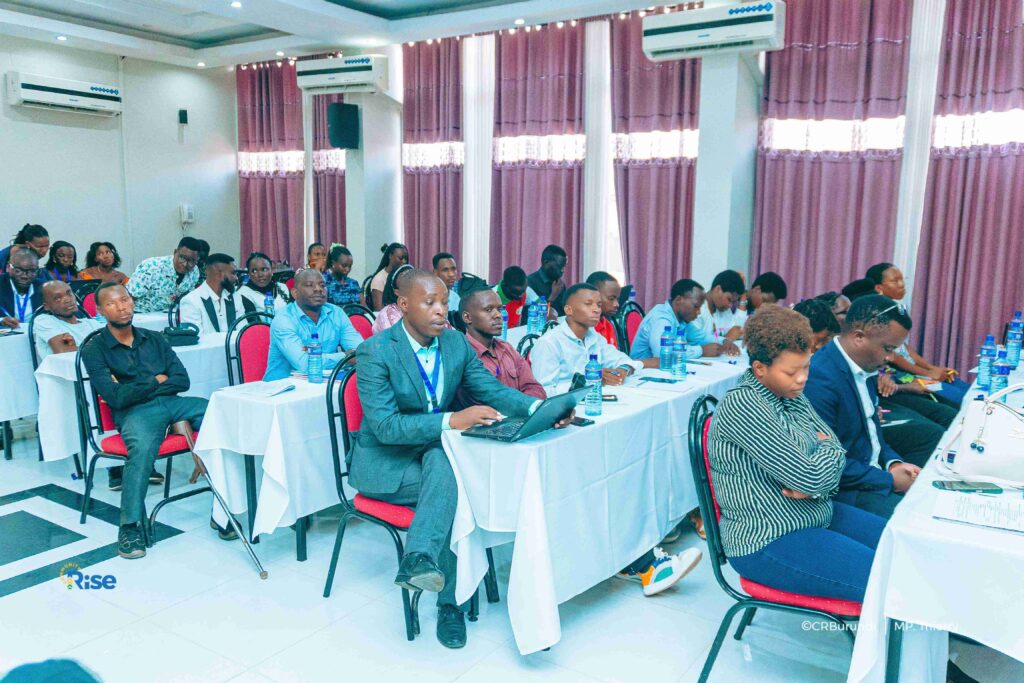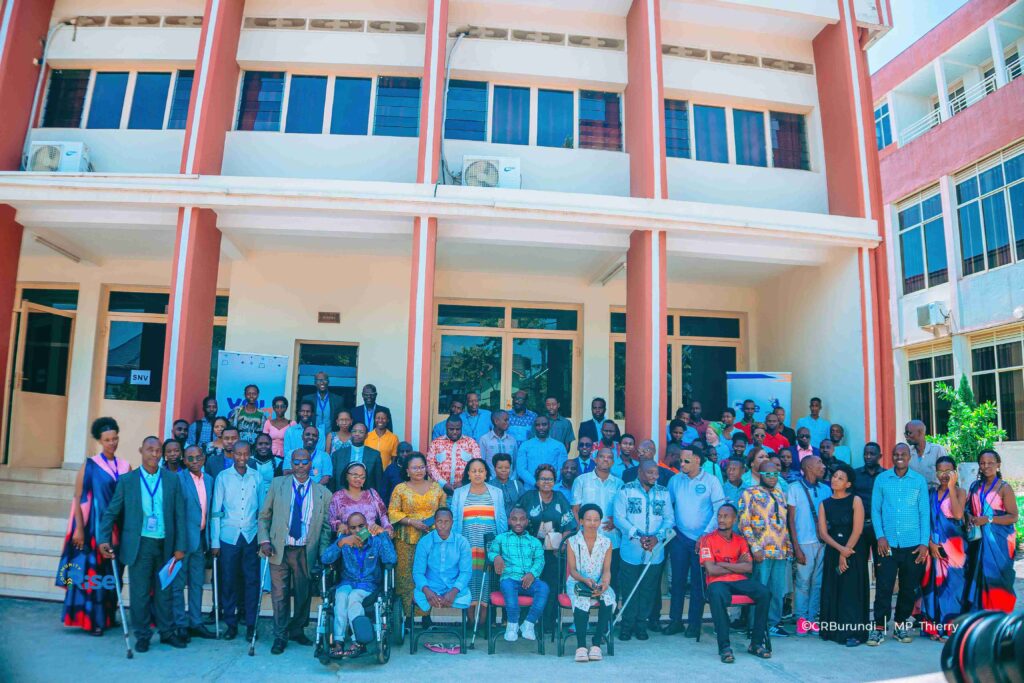
On May 6, 2026, the King’s Conference Centre in Bujumbura became a powerful space for dialogue, advocacy, and collective action as Community Rise, in partnership with AIPH Emmaüs Burundi, organized a mini roundtable on inclusion, accessibility, and the well-being of students with disabilities in universities. Held under the Voice+ Project with support from the King Baudouin Foundation, the event brought together 103 participants from universities, government institutions, embassies, development partners, civil society organizations, media, and organizations of persons with disabilities.
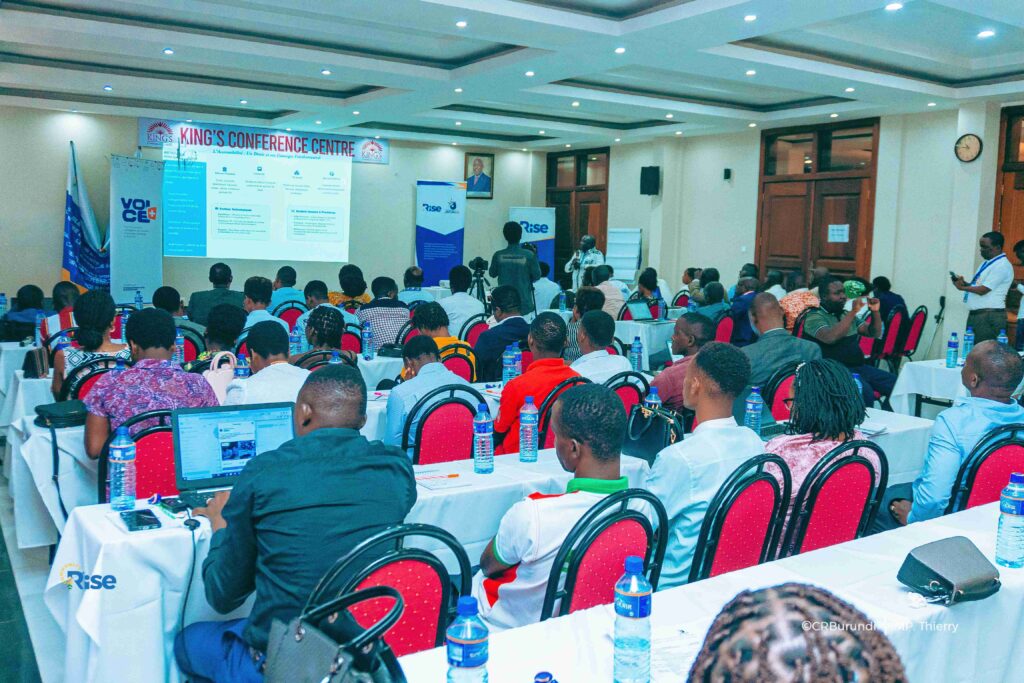
More than a conference, the gathering reflected a growing national movement toward inclusive education and equal opportunity for all students in Burundi.
Opening Ceremony: A Shared Commitment to Inclusion
The day began with participant registration and networking facilitated by Master of Ceremony Professor Elias SENTAMBA. The official opening ceremony featured remarks from representatives of the Province of Bujumbura, CORPHB, the Ministry of Home Affairs, and Community Rise.
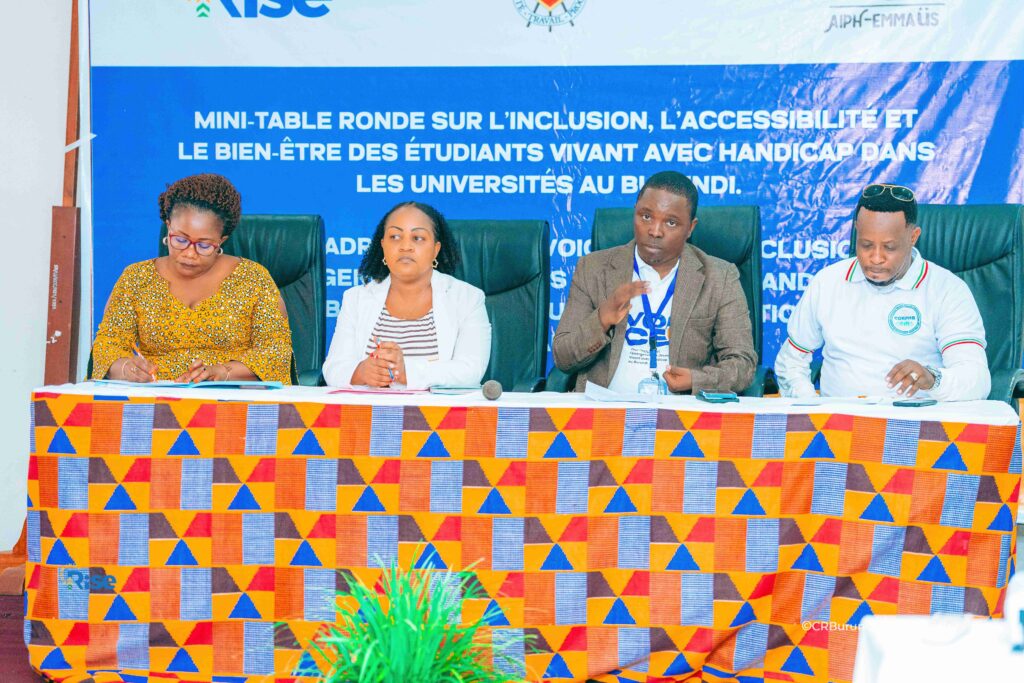
Jimmy Ndihokubwayo, Founder and Executive Director of Community Rise, emphasized the urgent need to ensure that students with disabilities are fully included in Burundi’s higher education system. Participants were also introduced to the Voice+ Project by Remy Ndereyimana, President of AIPH and project partner, who highlighted the importance of building universities where every student can thrive academically, socially, and emotionally.
Testimonies That Inspired Reflection
One of the most emotional moments of the event was the video testimony of Therence Niyongere, a university student who shared his lived experience with inaccessible educational environments. His testimony highlighted the daily realities faced by many students with disabilities, including inaccessible buildings, mobility challenges, exclusion, and limited institutional support. Watch it here:
Another inspiring testimony came from a student with sensory disabilities from Penn Blind School, who spoke about resilience and the importance of inclusive learning spaces. These testimonies transformed policy discussions into deeply human conversations about dignity, belonging, and hope.
Expert Presentation on Physical Accessibility
The event also featured an expert presentation on physical accessibility delivered by NSABAYEZU Eugene, a UN System expert. His presentation challenged institutions to rethink infrastructure planning and create environments that are accessible to everyone.
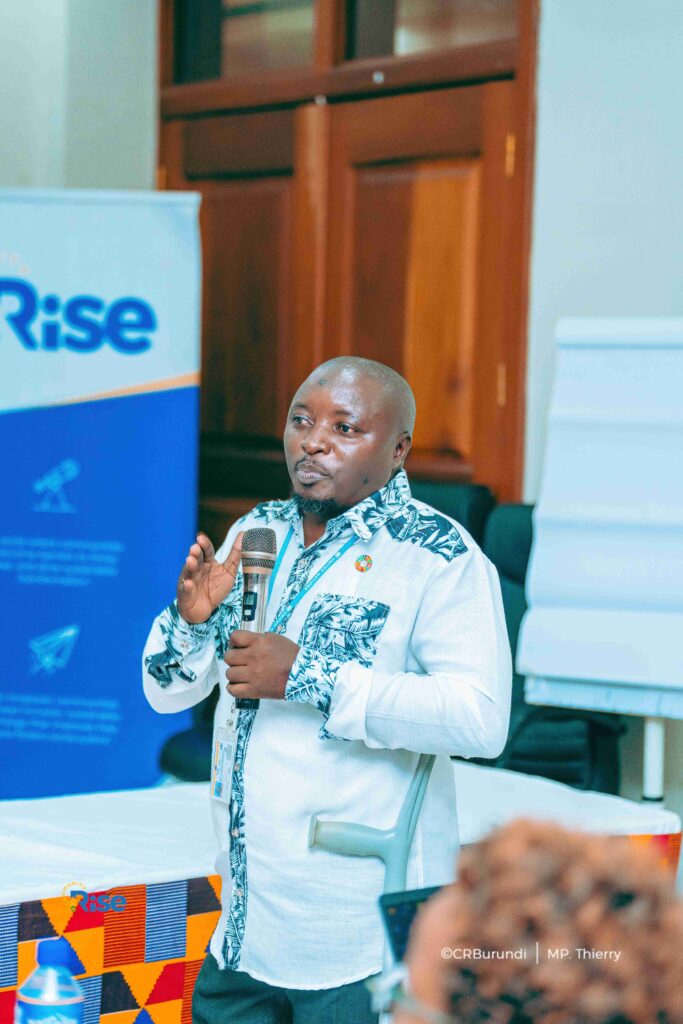
He stressed that accessibility should not be treated as an afterthought, but as a fundamental standard for inclusive development and equal participation.
Panel 1: Accessibility and Inclusion in Higher Education
The first panel discussion, co-moderated by Remy Ndereyimana and Therence Niyongere, focused on accessibility and inclusion within higher education institutions.
The panel brought together representatives from:
- University of Burundi
- Ministry of Infrastructure
- Ministry of Education
- and NSABAYEZU Eugene,
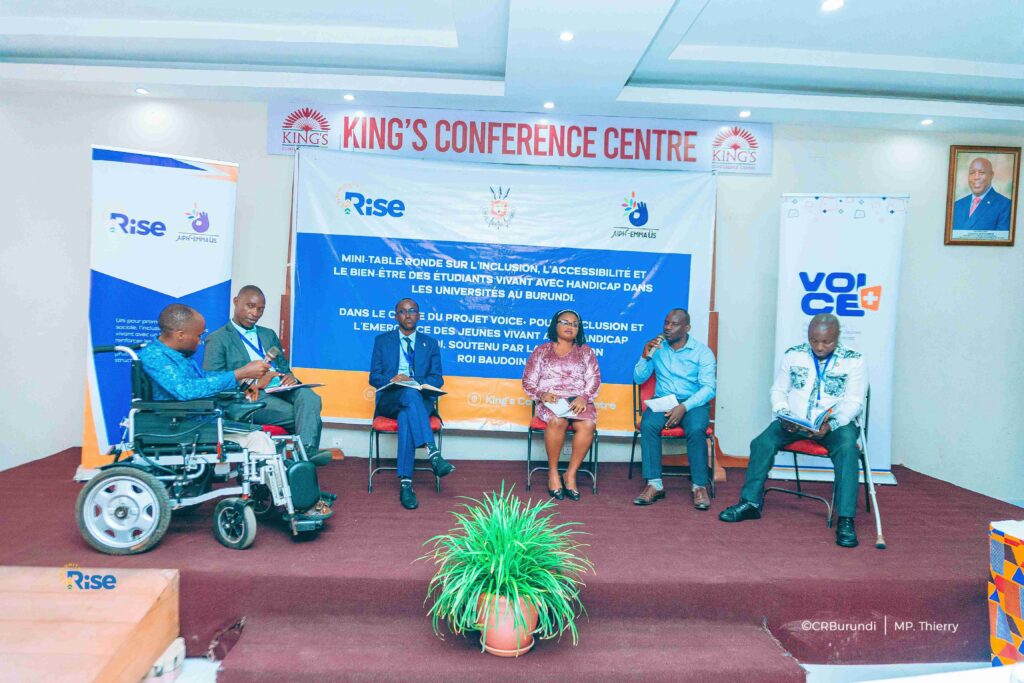
Discussions explored the current state of accessibility in universities, physical and pedagogical barriers, institutional gaps, and practical solutions for creating inclusive campuses. Panelists emphasized that inclusion goes beyond ramps and buildings. It also requires accessible teaching materials, trained educators, supportive services, and strong institutional policies.
The interactive exchanges with participants demonstrated a strong willingness among universities and stakeholders to work together toward more accessible learning environments across Burundi.
Panel 2: Mental Health and Well-Being of Students with Disabilities
The second panel focused on mental health and psychosocial well-being, an issue often overlooked in disability inclusion conversations. Co-moderated by Dr. Bizimana Jean De Dieu (Representative of Universite Lumiere de Bujumbura ) and NIYOYITUNGIRA Bernadette, the session created an open and honest discussion about the invisible struggles many students experience.
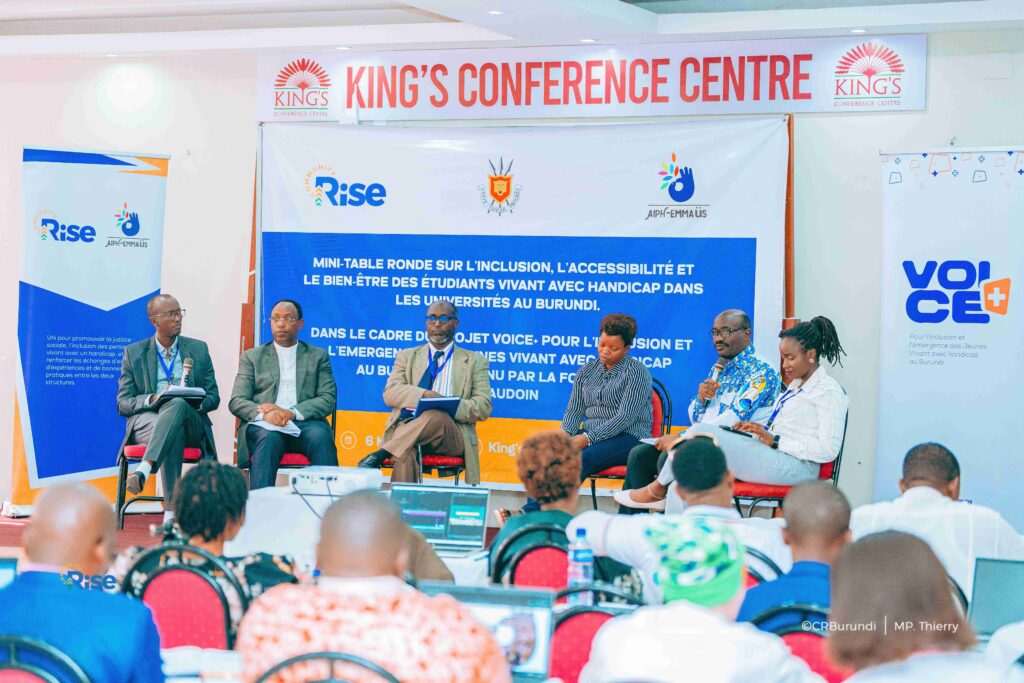
Panelists included:
- The Director of Lycée Notre Dame de la Sagesse – CND Gitega
- Association des Femmes Psychologues en Action
- Professor Siméon BARUMWETE
- A Representative from Université des Grands-Lacs.
Speakers highlighted how stigma, exclusion, and discrimination affect students emotionally and psychologically. Discussions emphasized the importance of psychosocial support systems, mental health awareness, safe academic environments, and compassionate university communities where students feel respected and valued.
Development Partners and International Engagement
The afternoon session reflected strong international support for inclusive education in Burundi. Representatives from the King Baudouin Foundation, the U.S. Embassy, UNICEF Burundi, and Emmaus International attended. Uwezowamungu Emile, the KBF Liaison Officer, shared reflections on the importance of partnerships and investment in disability inclusion.
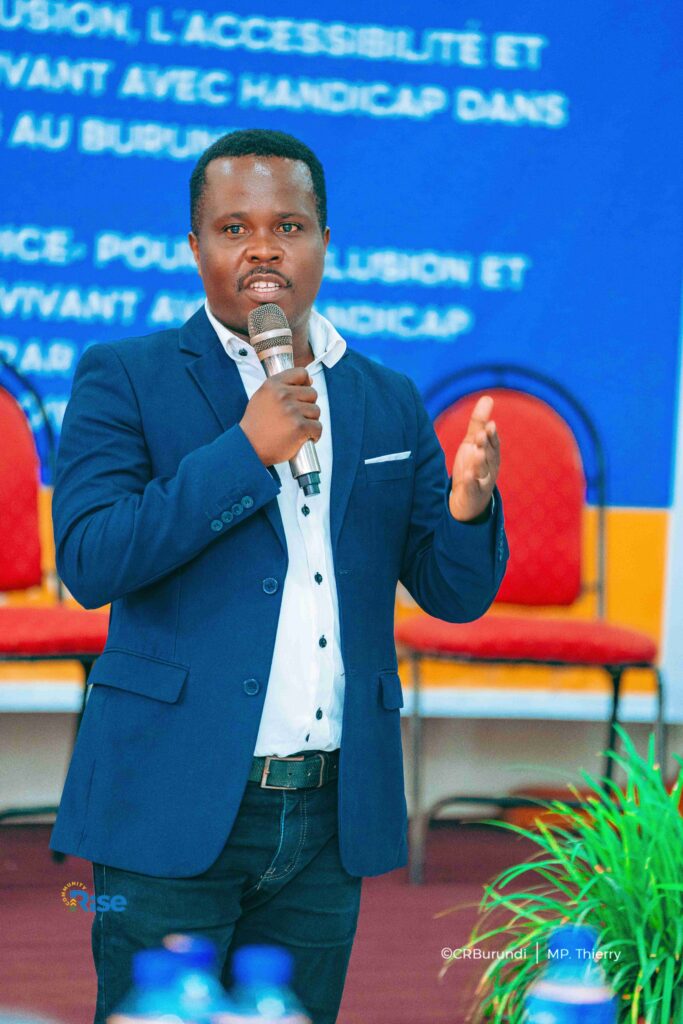
A special contribution from Anjam Chaudhary, PhD from Michigan State University, brought a global perspective to the discussions through reflections and best practices from Michigan State University’s inclusion efforts.
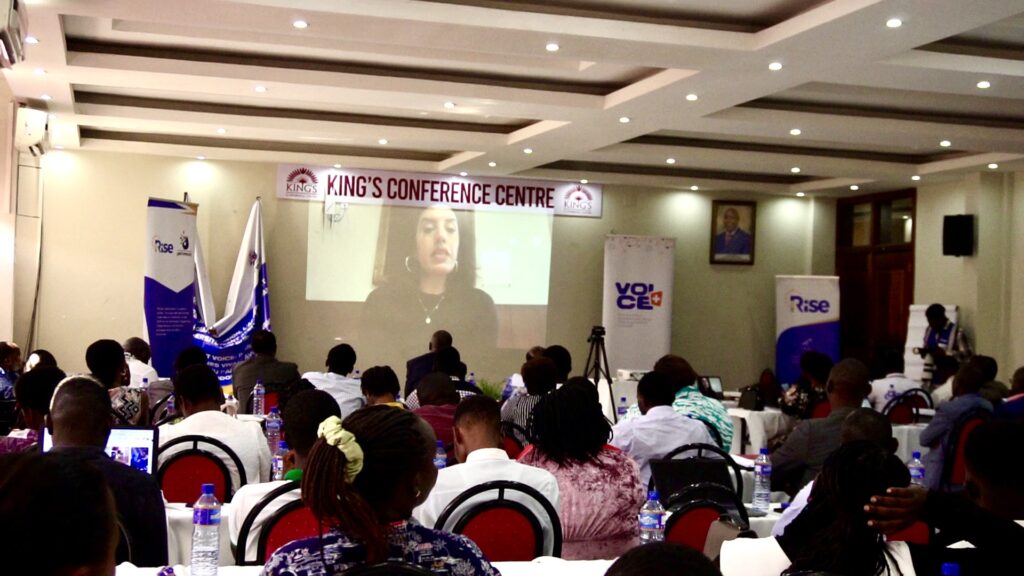
Watch her intervention:
From Dialogue to Action
One of the most productive moments of the event was the recommendation-building session facilitated by Professor Elias SENTAMBA. Participants proposed concrete actions including improving accessibility infrastructure, strengthening psychosocial support services, developing institutional inclusion policies, increasing partnerships, and ensuring students with disabilities are represented in decision-making spaces.
As the event concluded, one message remained clear: inclusive education is becoming a national priority in Burundi. Together, Community Rise with AIPH Emmaüs Burundi and other local implementation partners are helping build a future where every student, regardless of disability, can access education, feel included, and thrive with dignity and opportunity.